Showing posts with label forgiveness. Show all posts

Friday, October 18, 2019

Stood Up


Have you ever been stood up? You’re waiting and your friend doesn’t show. “Did I get the wrong day, time, or location?” I check our correspondence and it’s all clear. When I try to reach her, there’s no answer. I begin to worry. “Why aren’t I hearing from her? Is she okay? What if something happened?” Then comes insecurity. “Did she really not want to see me? Am I not important enough for her to remember our date?” Then I get mad, because “I know I’m worthy of love, friendship and belonging, and how dare she do this?!!!”

Finally, sanity prevails. I go back to something I learned in Marriage 101 (which applies to any relationship): “Assume Good Will.” Assume there is a valid reason why my friend was unable to meet me. Assume something prevented her from letting me know. She’s doing her best but couldn’t make it. Check with her later. Extend grace, and make the best of some unexpected free time.

But yesterday, I was the one who erred. I was the one who stood up a long-time friend. She’s a kind, intelligent, interesting person and I cherish our visits but I missed our date completely. We hadn’t seen each other in months and I was really looking forward to it. But I didn’t show.

I felt like a total schmuck. I needed my friend to assume good will. If she could understand, would she still love me? I wasn’t in a position to give her a full explanation. Text messages are not the place for that. Most “reasons” simply end up sounding like excuses.

But even without knowing why, my friend decided to give me another chance and we rebooked. For this I am so grateful. Every relationship requires give-and-take. Assuming good will. Forgiveness. Second chances.

And for me? I apologize. Explain if possible. Then let it go. Don’t beat myself up. Shame cripples. Don’t beat others up, either, when they do it to me (not even silently in my own head). Resentment kills.

Here's something to chew on: Must you understand before you can love? Does understanding always result in love?

What I have come to know is this: Love is a choice. Love precedes understanding. Sometimes, love shines brightest after a misunderstanding. Love does not depend on fully understanding but love will always seek to understand. 


Photo 1: Photo by Olga Popovych on Unsplash
Photo 2: Mine, text design on WordSwag

Tuesday, November 27, 2018

The Grudge Has Met Its Match


Confession: I was about 30 years old when a friend did something that hurt me very deeply. She was one of those really nice people that everyone liked, always well-behaved and never stepped out of line.  It was a conversation she had with my husband when the three of us were together. I had no evidence that she intended to be rude or insensitive. There is no way she could have known that ignoring me during her brief banter with my husband had touched a very tender part of my heart and created a deep wound in an already vulnerable place.

I was generally confident in most things, talented, outspoken, opinionated. But our marriage was troubled. I was insecure about my relationship and this short conversation triggered fear. My husband admired her. A little too much, I thought. My imagination was a bit too vivid: I could be abandoned, rejected completely, as I had been completely ignored while the two of them chatted. A small wound began to bleed and I didn't address it, so it began a slow downward spiral towards a root of bitterness in my heart.

What she said was frivolous, a thoughtless, throwaway conversation. But it stuck like a fish hook in my mind, and I gave it meaning and import that it did not merit. The talons of suspicion and jealousy clawed deeply into the raw layer of "I am not enough." I nursed that wound. Dark thoughts began to creep in. From then on, I viewed every interaction with deep distrust. I saw twisted motives in everything she did. And the grudge grew.

Because you're not what I would have you be, 
I blind myself to who, in truth, you are.
~Madeleine L'Engle

I never talked to her about the perceived offence. There was a part of me that knew, deep inside, it really was my issue, my response, my pain, my fear but I didn't seriously sort through the emotions until years later. We were working on our marriage, but every interaction and observation with this person from then on was clouded by the firm (but flawed) conviction that she had the world handed to her on a silver platter and my husband was the next thing on her wish list. I believed this lie. I would ensure she never enjoyed our friendship again. If I could have, I would have tried to stop her getting anything good. It was a horrible place to be.

Holding a grudge against someone means 
you think you know what they deserve 
and you take it upon yourself to give it to them. 
~Dr. Timothy Keller

Instead of sitting with the pain and discovering what it triggered in me, I blindly blamed her. Blame allows me to deny my own responsibility for forgiveness, reconciliation and restoration. For years I distanced myself. For years I viewed everything she did with distain and contempt, not even giving her credit for genuine successes she attained in her life. When we had to be in the same room at the same time, I kept up the pretence of amiable acquaintance, but it was stiff and disingenuous. Bitterness ate me up inside.

Author, Serena Woods, writes about this kind of bitterness: "If everyone did everything right concerning you, you would have never learned what the pain taught you. Lessons are valuable and no price can be put on them. Bitterness shows that hanging on to the failures of others is more important than the lesson.

Bitterness shows that hanging on to the failures of others
is more important than the lesson. ~Serena Woods

This went on for many years. It's amazing the staying power of a grudge. I could still tell you the exact words of that conversation, but now, I've begun to let it go. In 2010, I started attending Freedom Session, knowing I needed Jesus' healing for this and many other issues. I learned my bitterness and pain were rooted in fear of abandonment, insignificance, displacement. I learned to stop blaming and to get out of denial. To stop believing the lies that I was "less than." I learned to take responsibility for my own attitudes, actions and behaviours. I learned to make amends. But even after taking the course twice, I still hadn't completely accomplished the "forgiveness" step.

Not for lack of trying! I confessed and wept before the Lord on multiple occasions over the last 30 years since The Incident. But it had a deep root I regularly tended, watered and fertilized before I began listening in obedience to the convicting power of the Holy Spirit.

"Forgive as I have forgiven you." (Matthew 6:12-15)

I thought I'd forgiven it, then from time to time it raised it's ugly head again. I'd have genuine, loving interactions with this person and then go home and the enemy would come in like a flood, suggesting nefarious intent of her part. It came like a roaring lion trying to devour me. I needed the armour of God!

But our gracious, good Father continues to wait, patiently, for the prodigal daughter to return. Over the past six years since I was widowed, by God's grace, I've begun to walk the path back to genuine, lasting forgiveness. I've sat with the pain, facing the stark reality of what unforgiveness has done to damage my relationships and my spirit.

The Holy Spirit gently points to what God has done in dealing with my sin. Can I do any less?
  • I will forgive their wickedness, and I will never again remember their sins. (Hebrews 8:12)
  • I, even I, am he who blots out your transgressions, for my own sake, and remembers your sins no more. (Isaiah 43:25)
  • As far as the east is from the west, so far has he removed our transgressions from us. (Psalm 103:12)
  • Once again you will have compassion on us. You will trample our sins under your feet and throw them into the depths of the ocean! (Micah 7:19)

There are those who may be given an extraordinary grace to forgive instantaneously. But in my case,  forgiveness has not been a "once and done" action. Over and over and over, every time those old feelings of bitterness begin to creep back in about that ancient offence, I must choose to say (sometimes out loud so my heart hears it twice), "I distinctly remember forgiving that." 

Now I need to release it.

Clara Barton, founder of the American Red Cross, was reminded one day of a vicious deed that someone had done to her years before. But she acted as if she had never even heard of the incident. “Don’t you remember it?” her friend asked. “No,” came Barton’s reply, “I distinctly remember forgetting it.”

I love what Joanie Yoder writes in Our Daily Bread: “God doesn’t say He’ll forget our sins—He says He’ll remember them no more! His promise not to remember them ever again is stronger than saying He’ll forget them.” She goes on, "Because Christ died for all our sins (1 Cor. 15:3), God promises to forgive us and never bring up our sin again (Ps. 103:12)."

This is my prayer. To continuously forgive and to stop remembering. The grudge has met its match. I choose to let God throw it all into the un-remembered depths; into the sea of his forgiveness.

You too?

God, whose every way is perfect,
Said in justice and in grace
That our sins He’ll not remember,
And our fears He will erase.  


Photo 1 by Lina Trochez 
Photo 2 by Michael Olsen

Friday, December 11, 2015

Dealing with Verbal Abuse


When someone close to you wounds you with their words, it can be painful, especially when it’s clear they meant to hurt and the cuts go deep. Most of us have been there and some must deal with this on a continuing basis.

Elizabeth Gilbert says, “When someone asks, ‘Can I be brutally honest?’, say ‘No!’, because what they are really asking is if they can brutalize you.”

My friend, Jane (not her real name), has an extended family member (we’ll call her Cruella), who regularly attacks Jane, casts dispersions on her morals and values, her relationship with her spouse and even attacks the core of Jane’s identity with ugly, baseless verbal attacks.

“For a long while,” Jane says, “I just silently took it, trying desperately to win her over. I became a door mat.” She believed that being sweet and kind, in spite of what Cruella said, could win her over.

“That did not happen,” she says “and it continued to get worse. Cruella had no respect for me, and why should she? I was the door mat, where she’d wipe her dirty, muddy feet, walk away and continue with her life.” 

Sometimes, in these cases, the healthiest boundary we can set is to love someone from a distance. We can forgive but we do not have to continue putting ourselves in harm's way. Avoiding situations where we have to be around them helps protect us from unnecessary hurt. Even if we forgive them, forgiveness does not automatically require reconciliation.  Only a positive change in behavior (repentance) can pave the way for a restored relationship.


However, we can’t always avoid the bully. Due to other ongoing relationships within the family, Jane is obliged to stay in relationship with her abusive family member. She explains, “I know it would be unhealthy for my children if I told them anything (about the verbal abuse) - this is between me and her – it has nothing to do with them.” She knows just one conversation about it with her adult children could totally kill their relationship with Cruella, but she chooses not to tell them. “That would be pure hatred on my part and that is not what God would have me do.” 

Jane continues, “Because of my children and their relationship to Cruella, I have to constantly get back into the ‘ring’.” In order to do this without being crushed, she made three rules for herself regarding the ongoing attacks from Cruella, and when she shared them with me, I felt it was something that would helps us all.

So from the personal experience of Jane, here is her loving, wise advice on how you can navigate the territory if you must stay in relationship with an unkind person:

Set safe boundaries, never go into that ring alone and don't go into it very often.

1.  Set Safe Personal Boundaries

This may include speaking gently but firmly to the other party, like you would to any bully: “I am not willing to hear you speak in this way. If you cannot be kind, I will have to leave.”  However, boundaries don’t always have to be shared with the other person. Jane’s boundaries are set in her heart and head when it comes to Cruella – placed there by lots of talking with her supportive spouse.

Consider reading: Boundaries: When to Say Yes, How to Say No, to Take Control of Your Life by Dr. Henry Cloud and Dr. John Townsend

2.  Never Go Into That Ring Alone

Jane explains that Cruella’s “attacks” always came when they were alone, one-on-one.  There are no witnesses, and that seems to give the other person more liberty to make the attacks deeper and more personal because you have no one in your corner. Never meet your abuser one-on-one. Go with a trusted family member, a loving friend, or meet in a group. At family dinners or social functions, make sure you have a safe, loyal person looking out for you, standing with you always, so that your Cruella cannot corner you.

3.  Don’t Enter That Ring Often 

Make your meetings and get-togethers fewer and farther apart.  You don’t have to attend everything where she’ll be present. Say “No” to certain functions and invitations if you might be forced to be alone with your Cruella.  Delay answering texts, emails and voice messages. Don’t respond immediately. Jane says she’ll sometimes let a few days pass before she answers.  “Depending on the content,” she adds, “if no questions are asked, or if it is just information, I don’t respond to them at all.” Instead of returning a phone call, send an email.

If the abusive person demands immediate replies and you are not yet prepared to reply, defer with a response worded something like, “I can’t answer at this moment, I will take a day (or whatever period of time you need) and get back to you.” Or “I will run this by (my spouse, partner, family) and let you know later today/this week/by X date.”

Jane recommends that you always be kind and gracious but keep an “emotional and mental distance” with your own Cruella. 

“You owe her nothing, except to be polite and respectful,” Jane says, “the way we would be with any person who comes into our life.” You don’t need to apologize or feel obliged to give explanations, as these sometimes provide further fuel for your abuser to twist, take out of context or throw back at you. 

While these guidelines help Jane cope with the unavoidable situations where she must be around Cruella, she says it has not healed the relationship.

“It probably never will,” she says, recognizing that Cruella “has been wounded herself and hurt people hurt people.”


Both Jane and I hope and pray that you find these guidelines helpful. These can be a launching pad for your own healing and self-care when dealing with difficult people.

Wisdom from one wounded warrior to another.


Please note: This blog entry is intended to address your relationships with extended family members, work colleagues or social peer relationships. If your Cruella is a spouse, a boss, or your child, these guidelines may not be possible to enforce. Please seek professional help if you are in a situation where you feel powerless or unsafe.

Tuesday, September 15, 2015

The Amazing, Awful, Ordinary, Beautiful Life


A Facebook photo and commentary on the "Perfect Life" by gifted adventure photographer, John Price, woke me up this morning. His candor is refreshing and echoes what many have felt but could not articulate about social media.

The disturbing reality of photography (and social media) is that it can lie or tell the truth (and everything in between). In art, as in life, we strive for excellence, to find and showcase our best selves, our best work, in the best light. But as much as we try to hide our flaws behind appearances, carefully crafted eloquence or post-processing, some of the post powerful lessons and imagery comes from the shadows.

While we want to live in the infinite spectrum of colour, there is nothing more powerful than facing the stark contrast of black and white. While we pursue the adrenalin rush of hanging from a cliff face, we also desperately require the silent stillness of black night to sleep and restore our bodies. All darkness and desire with no light produces Gollum. All sun and no rain produces drought. The true artist must acknowledge that it all matters, that we cannot deny any part of ourselves, but we also cannot dwell only in one arena. Cover it, discover it, uncover it all and bravo for finding a way to share your real self. It gives us permission to do the same.

It is in naming our fear that we take away its power. One underlying human fear is that we will never be enough, have enough, do enough, attain enough. Or perhaps our fear is that we will succeed, and lose ourselves in the process.

I spent more than half my life with a dear man who both feared he was not enough yet succeeded in every goal he set. The effort it took to maintain appearances was completely exhausting. He was an endearing, humorous and entertaining man, yet was unwilling or unable to be open and vulnerable about his fears and shadows. This meant he struggled alone, emotionally disconnected from others, not realizing that many have walked the same path and that there is hope and help in community.

As David Whyte says in his essay, Friendship, we need someone to walk with us, believe in us, and sometimes just to accompany us "for however brief a span, on a journey impossible to accomplish alone." He continues:
We encourage the best in them, not through critique but through addressing the better part of them, the leading creative edge of their incarnation, thus subtly discouraging what makes them smaller, less generous, less of themselves. Through the eyes of a real friendship an individual is larger than their everyday actions, and through the eyes of another we receive a greater sense of a self we can aspire to, the one in whom they have most faith. Friendship is a moving frontier of understanding, not only of self and other but of a possible and as yet unlived future.
Yet as much as we can have those who are a mirror for us, a testament to forgiveness, we still must receive the gift of being ourselves with all that it entails. Dr. David G. Benner writes about this as the spirituality of desire:
Our deepest desires call us to both soar on the winds of spirit and be grounded in the realities of body and soul. They point us toward the self-transcendent but encourage us to remain anchored in the mundane and immanent. They invite us to honor both longing and belonging. Soulful Spirituality
So, as John Price writes, most of us are guilty of falling for the myth of "Perfect Lives".  In our search for longing and belonging, we scroll through social media platforms while judging our own lives, moments, achievements and work against others.

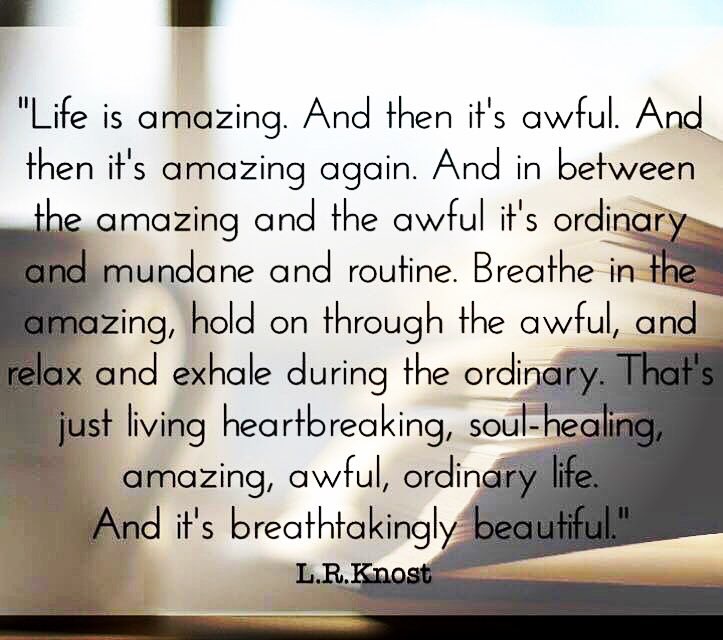
Bottom line? It’s not a perfect life. For me, for you, for anyone else. I continue each day to work at telling myself the truth, to be a friend who is present, forgiving. To stop the deadly sin of comparing myself to others. To search out ways to fulfill my longing to be healthier in mind and body while accepting myself as I am in this moment. To be willing to stand in front of the camera instead of hiding behind it.  To name my fear in a safe place so that it loses just a little bit of its power every time I call it out. To share my wounds with merciful friends so I can heal just a little bit more every time I talk about it. To accept others as they are, flaws along with glory. To encourage the better part of themselves to rise. To always be aware that life is amazing, and then it’s awful, and in between it’s just daily and mundane and I can live and breathe and love through it, because I am loved. I belong here, in this life, doing what I’m meant to do.

Come with me?


Friday, April 24, 2015

Apples of Gold


“It really makes me sad to see you speak so harshly to yourself.”

I looked at his face, tender with concern. Harshly to myself? What had I said?

“I pray I will know when to speak and when to shut my mouth.”

It was, on the surface, a genuine concern to only say what is helpful. To not speak in unhelpful or hurtful ways. To carefully choose my battles and determine which hills to die on, then speak with the right attitude and in the right tone of voice. Because we know that it’s not so much what you say but how you say it that leaves the listener remembering how you made them feel. For goodness sake, I even pray about this sort of thing. And I sometimes decide not to speak when I listen to the still, small voice which cautions me to be still.

I had said the first part in a normal voice: “I pray I will know when to speak.” Speak up for those who have no voice. Speak peace into a troubled heart. Speak encouragement for the weak one. Speak up when I have been wronged. I’m still learning how to do that last one without being a prickly pear.

But when to shut my mouth? Ah, that I said with a snarl and a curled lip. A self-flagellation for every time I spoke out of turn, spoke too loud, spoke unkindly, hurt someone, accused someone, berated someone.

It takes me right back to Grade Eight science class when Bruce and Gerry gave me an unflattering nickname: Meramac Cavern Mouth. They were my friends, we sang together. I liked them. We teased each other. But I was loud and they poked me for it, choosing the largest cave in the state as my namesake.

Yes, I was loud in Junior High. I was obnoxious. I was funny. I was busy. I was a singer. I was confident. I was sometimes insecure and I was trying to find my place in the world, just having experienced my first kiss.

That was awkward and gross. I didn’t know what to do with that icky feeling. So I redirected it in anger against the boy who tried it and to my best friend and her boyfriend who goaded us into it. Sitting on the cold floor of her parents’ garage, we two couples, all the early side of 14 years old, decided to explore kissing. And it was a bomb. I was embarrassed. Was something wrong with me? Was it him? Neither one of us knew how. I was disappointed that I’d chosen poorly and I could never get “my first kiss” back. It was gone and now it would forever be engraved in history as a bad mistake I made with a pudgy Grade Seven boy.

What followed was my first experience with really hurting someone with my words. I broke up with the boy and decided I didn’t want to be friends with my best friend any more. I made unkind remarks about her to others at school. The vitriol went on until one of the teachers called me aside to say, “I know your brother (a teacher in Grade Six) and I know your family and I know they didn’t raise you to act like this. You are being a bully and it needs to stop.”

I did stop. I was embarrassed that someone had to take me aside like that, yet I was grateful because I knew he was right.
“The right word at the right time is like a custom-made piece of jewelry, and a wise friend’s timely reprimand is like a gold ring slipped on your finger. Patient persistence pierces through indifference; gentle speech breaks down rigid defenses.” Proverbs 25:11-12,15 (MSG)
My friend and I made up but it was always different after that. We had both been wounded and my words had left scars on us both.

The awkward, gross, icky feeling of Grade Eight surfaces every time I see that look in another person’s eyes: I’ve hurt them. I kick myself over and over for speaking at the wrong time or in the wrong way, even if what I said was valid. They couldn’t receive it because my timing or tone of voice was offensive.

As time passes, as I mature, I have earned a measure of success and respect for how I speak and what I write. But as many writers do, I write very carefully, wrestling long and hard over anything I put in print: to say it right, to say it well, to say it clearly. It can take an entire morning to write and publish one blog post. And I anguish over emails, writing and re-writing paragraphs to minimize any possibility of misinterpretation and still, it is sometimes misunderstood, the reader misses the point or fixates on one ill-chosen phrase.

I have no one to blame but myself.

Or so I thought.

In sober second thought, my rational mind can logically deduce that others are also responsible for their reactions. They hear what I have to say through their own background experience and emotional filters. They give different value, meaning and weight to my words than what I intended.

When another is offended, I can sometimes understand in retrospect how it hurt them, if they let me know. More often they don’t say anything. They just fade away. Not many people confront me about my words. Not many people confront anyone. It seems confrontation is avoided at all costs by a majority of us.

When that unsettled feeling rises, that subtle alienation after I say something intense, passionate or strong, I go away and analyze it. Replay the full conversation, maybe the entire event in my head more than once, guess at how it might have been interpreted (how impossible is that, since I’m trying to understand someone else’s filters through my own).

I know I am not alone in this practice. You do it too, perhaps?

So back to the original remark that started this all off. When I pray I want to know when to keep my mouth shut, I’m thinking of all that has come before. All the ways I’ve caused pain to the heart of another. That overbearing burden of being a person who so often wounds another, that somehow I should be able to not do that.

I should be perfect.

Or at least, “If you can’t say anything nice, don’t say anything at all.”

So I turn on myself. “Keep your mouth shut!” my inner critic snarls.

And the one who loves me best, who sees me at my worst, who has promised to love and cherish me until death parts us, tells me how sad he is to see that venom turned inward.

This is a shining moment in love, in marriage: the mirror held up by a loving hand to help me see clearly where I am self-cutting. The one who sees my heart, knows my life and moves to restrain my hand from the mea culpa.

“It is not only what you say but, more importantly, how you say it.”

Especially when you are saying it to yourself. Self-compassion is not selfishness. It is what makes it possible for us to live whole and compassionate in all our other relationships.

He goes on, “Ask yourself how you would speak to another person, and speak to yourself in that same courteous way.”

Words can heal and words can kill. Words wound and words give life. So, I will continue to pray about when to speak and when to be silent. Because silence is not always golden. Sometimes silence means consent or cowardice. In that case, speaking graciously is the most loving way to live in community with one another.

I’m so glad for the way another spoke healing words to me.
Watch the way you talk. Let nothing foul or dirty come out of your mouth. Say only what helps, each word a gift. Don’t grieve God. Don’t break his heart. His Holy Spirit, moving and breathing in you, is the most intimate part of your life, making you fit for himself. Don’t take such a gift for granted. Make a clean break with all cutting, backbiting, profane talk. Be gentle with one another, sensitive. Forgive one another as quickly and thoroughly as God in Christ forgave you. Ephesians 4:29-32 MSG


Friday, November 28, 2014

You Deserve It


“I’m so happy for you. You deserve this!”

My friend Susan and I were talking yesterday and rejoicing in the beautiful love I’m experiencing in my marriage.

It’s a lovely sentiment expressed by a caring friend. It’s not the first time I’ve heard something similar to this. Yet, every time, I recoil at the word, “deserve”.

“I don’t feel like I deserve anything,” I said.

Why is that?

My friend means it as an encouragement but somehow I hear it with foreboding, unworthiness, even guilt. It seems inherent in the phrase is the suggestion that “deserve” smacks of entitlement. Like I’ve somehow earned the right to be happy.

Deserve? What do I deserve? Sure I’ve had my share of sadness. Even in that phrase, there is a comparative term: “my share”. As if, somehow, I have “paid my dues” and now I have “earned” the right to be happy.

Life is not a competition, although many might view it that way. Some even find it motivating to “work hard, apply myself, so I can reap the benefits and earn what I’m worth.”

“It’s endemic in our religious upbringing,” Susan quickly points out. I know immediately what she means. We know we can’t earn salvation, that because of sin we deserve the punishment of death, therefore we don’t deserve the grace that God lavishes upon us. It’s unmerited favor. That’s why it’s grace. It’s a free gift.

Rather than take this blog into a long, heated discussion of differing theological points of view – like some of my early family holiday dinner conversations (shudder – can you say “indigestion”?) think about how much of life is competitive.

“Faster, Higher, Stronger”
“Auditions will be held…”
“Job competition”
“Performance bonus”
“The Top 40” (this week)
“You get out of this what you put into it”
“I must be living right” or “I can’t do anything right”
“I really worked hard for this”

We track games, races, sports scores and team records, tracking stats and doing analysis at the micro level to find yet one more way to give comparative status to the value of each player or athlete. If we take Second Place by one-hundredth of a second, the only title given is “Loser”.

We have regular performance evaluations in our workplace and annual salary reviews, which determine our compensation for services rendered. There are salary grids for different job classes and corporate guidelines about how quickly one can move up in their range. Bonuses, commissions, profit-sharing are all based on “What have you done for me lately?” There are companies that specialize in quantifying the value of a role and creating quantifiable measures for individual experience and skill.

Profit is good, loss is bad. We strive to choose the best financial products to achieve the highest possible return on investment (ROI). We seek out the “most reputable” advice and “most comprehensive” research and investment advisors with the best track record in financial markets.
Ultimately, the assumed truism is: “You earn what you deserve” or “You deserve what you earn”.

On the other hand, there are other voices using terms like:

“It’s God’s will/sovereignty/plan/judgment/punishment.”
“Karma!”
“How lucky can you get?”
“How fortunate!”
“Just my luck!”
“The odds were against me.”
“The tide is turning in my favor.”
“The whole universe just waits for me to get cocky, then slams me down.”
“We lost because I attended the game, I’m bad luck.”
“You must have a horseshoe up your a**.”
“It just wasn’t in the stars.”
“It’s destined to fail.”
“That was a fluke.”
“It’s like magic.”

This second list reflects an opposite extreme to the first list. I’m sure philosophers, psychologists, social scientists and theologians all have their own terminology for these two opposing world views regarding our “deservedness” for blessings and benefits. I’m not going to research specific terms or cite scholarly sources (although the OCD side of me really wants to).

I want to get back to “You deserve this”. It seems this phrase could be used with equal convictions on both sides of the pendulum: grace or works. In my case, I fault on the “I didn’t earn it” side. (Please don’t comment on how worthy I am. I don’t write this to solicit any reassurances of my deservedness. In fact, I tend to dismiss that kind of sentiment).

I know when I’m giving my best and when I’m not. I know that many sad things have happened in my life and I spent more of the last couple decades grieving than celebrating. Yet I also crave affirmation when I have done a good job at something that mattered ANYTHING. In fact, I’ve spent my life measuring my worth by the applause of people. More recently, I’ve fought back against this compulsion and begun to understand the true measure of my worth is found in who I am, not what I do (but that’s another blog for another day).

I’m coming to the conclusion here that the key factor in any of this “deservedness” is not how I come to receive blessing or bounty, but rather, “Am I thankful?” Do I have a heart of gratitude? Do I have eyes to see the myriad of gifts that I have received?

When I am in a hard or dark place, I often think about the scripture’s instruction in the Apostle Paul’s epistle to the Philippians: “Don’t worry about anything. Tell God what you need. Thank Him for everything he’s already done and peace will follow” (my paraphrase of Phil. 4:6).

I believe “every good and perfect gift comes down from the Father of Lights” (James 1:17) and so God is the direct person to whom I offer thanks. But I don’t, not for one moment, believe that God gives these gifts because I deserve them. He gives them out of his rich generosity. Because God is love and all goodness, and thus, cannot give anything other than what is ultimately good for those who love him. He is a father who delights in giving good gifts to his children. Just like you.

So, whether I deserve it or not, I am grateful. And as I was looking for a proper conclusion to this musing, I thought of the phrase “after you have suffered a little while…”

It’s from 1 Peter 5:5-11
“… Clothe yourselves, all of you, with humility toward one another, for ‘God opposes the proud but gives grace to the humble.’ Humble yourselves, therefore, under the mighty hand of God so that at the proper time he may exalt you, casting all your anxieties on him, because he cares for you. Be sober-minded; be watchful. Your adversary the devil prowls around like a roaring lion, seeking someone to devour. Resist him, firm in your faith, knowing that the same kinds of suffering are being experienced by your brotherhood throughout the world. And after you have suffered a little while, the God of all grace, who has called you to his eternal glory in Christ, will himself restore, confirm, strengthen, and establish you.”  (ESV, emphasis mine)
Yes, I have suffered. Just like every person on earth suffers. Perhaps more, perhaps less. Some of my suffering has been by my own hand, poor choices or sinful decisions. These have been and continue to be confessed, forsaken and forgiven because Jesus died and rose again to pay the price for that 2,000 years ago. Thanks be to God!

Other suffering I’ve endured (sometimes not so patiently) has come by the hands of others who put me down, rejected, abused or abandoned me. All of this is in process of being healed, as I release it and extend forgiveness where needed. I am being restored. I am, through this process, being confirmed in my thoughts and attitudes. I am being strengthened and established not only in my faith but in the safe, caring harbor of a loving marriage.

Thanks be to God, who daily loads us with benefits. (Psalm 68:19, paraphrase)

Undeserved favor.

Grace.

I am SO grateful.


Monday, April 01, 2013

Psychology 101: Dealing with Difficult People


Each of us has probably done something that hurt or disappointed someone else. The chances are remote that anyone intentionally says or does hurtful things. 

But what about careless words? thoughtless? impulsive? angry words?

Or no words at all?

Dead silence.
.
.
.
.
.
Or worse, ambivalent words. Non-committal. Disengaged. Feigned apathy.

“What would you like to do?”

“I don’t care.”

“Where would you like to eat?”

“It doesn’t matter.”

“Do you want A or B?”

“Whatever. You pick.”

And then when you pick, they aren't happy. But then, would they be happy in any case?

In my view, this is dysfunctional, juvenile and temperamental. It expresses a dog-in-the-manger attitude that says, “If I can’t be happy with my current circumstances, then no one else is going to enjoy themselves either”. The dis-engaged person isn't expressing his/her true needs, he/she is just expecting others to be a mind-reader and fulfill every desire. This is the worst kind of  prima donna attitude: “The world should just make me happy without me having to speak a word or lift a finger.” 

On occasion this behavior is revenge-based. "You didn't do what I wanted, (or you hurt me) so now you're going to pay the price." 

What’s sad is this behavior produces no change in either party.

In my experience, people who act this way usually fall into two camps. They either 1) really do have an over-inflated sense of their own self-importance and feel others should cater to their every whim, "Because I'm right!" or 2) they hate themselves and are behaving in a way that guarantees others will dislike them, thus confirming their bias against themselves. 

There are other possibilities, but these are the more common and both border on an irrational view of relationships. This type of person frequently creates drama and/or division in a family or friend group (“I’m not happy until you’re not happy”). They subconsciously want attention (and bad attention is better than no attention). They get their way through emotional blackmail but even when they get what they want, they are discontent because they had to ask for it. Then when you try to get them to see how they are acting, they withdraw, pout, make excuses: "I'm just tired", or turn the tables: "Who are you to talk? You were mean to me last week."

How do you deal with this kind of person if you’re stuck with them? 
  1. Do you let them off the hook by finding excuses? “Oh, she’s in menopause” or “Oh, he’s under a lot of stress at work”. Or do you take the blame? "I must have done something wrong."
  2. Do you care enough to confront? If you name their behavior for what it is, would they believe you? Are they capable of seeing the futility of their behavior? Do they even want to be different or are they genuinely mean-spirited? 
  3. Or do you cut them off? Where does love, grace and forgiveness come in if they are unwilling to repent of this habitual conduct?

Sunday, March 04, 2012

Hard to Give Thanks


Image from stock.xchng

Who can't you forgive? Why can't I? I have someone I need to forgive every single day. You too? And I'm certain there is someone in my life who needs to forgive me every single day.

A discussion on a pastor's Facebook status today was in regards to forgiveness. If I don't forgive, God won't forgive me, this was the conclusion. I think the order is, however, that God has forgiven me, therefore, I must forgive.

I will forgive. It may take longer than I would like for me to get there. God may need to show me my reticence. I have forgiven in many situations. There are one or two remaining and new ones that surface from time to time. He may need to discipline me in ways that reveal my unforgiveness, but ultimately, since I am forgiven, since Christ is my life, I must, will, shall forgive. I am not alone in this effort. The power of Christ. The very Spirit of Christ who said "Love your enemies" and "forgive those who trespass against you" - this is the life I now live.

This is hard for me on so many levels. It requires death to self.

My human nature wants to rise. My "rights" are trampled and I feel resentment. My abilities are spurned for another's and I am envious. My needs go unmet and I am angry. These are the things for which I must give thanks.

Amanda Lindhout was kidnapped and held captive by Islamist insurgents in southern Somalia. She was held for 15 months, released in November 2009 when her family paid the ransom. She is now a sought-after speaker on the topics of forgiveness, compassion and social responsibility. She refuses to discuss the specific details of what happened to her in captivity.

However, a colleague of mine heard her speak recently and quoted Amanda as saying in her windowless prison where she was shackled alone in the dark for 10 months, she sought out something every day which she could count as a gift. If the guards handed her food instead of throwing it at her, that was a gift.

There was much more but it is not my story to tell. My story tonight is to find gifts that are hard to name as gifts. It is a little easier after hearing Amanda Lindhout's story. If she can find gifts in captivity, I better find them in my life.

Okay then. Let's get to it.

198. It is a gift that I am no longer invited to sing on worship teams in my church.
199. It is a gift to have someone in my life who doesn't share. This creates a lack in me. It is a vacant gift.
200. It is a gift to work full time. The hard part is to say it is a gift to not have my days free to do with as I would wish.

201. On the flip side, I can sing any time I please. No platform is necessary.
202. An unfilled hole is a space into which I can welcome the spirit of Christ. He offers to fill me to overflowing.
203. And being focused at work means that my time is spent in ministry instead of self-perpetuating indulgences. I think less of me and more of others.

Silence, vacancy and a lack of leisure can be turned into freedom, filling and giving - if I am willing.
Can I learn to say with the apostle:

I have learned to be content whatever the circumstances. I know what it is to be in need, and I know what it is to have plenty. I have learned the secret of being content in any and every situation, whether well fed or hungry, whether living in plenty or in want. I can do all this through him who gives me strength. -Phil. 4:11-13

Question: Do you readily forgive? What helps you get there faster? If you're hanging on to unforgiveness,  what would it take to change your mind?